
Teva Pharmaceuticals and Medincell announced on October 10, 2025, the U.S. FDA’s approval of an expanded indication for UZEDY® (risperidone) extended-release injectable suspension, now authorized for subcutaneous use as monotherapy or adjunctive therapy to lithium or valproate for maintenance treatment of bipolar I disorder (BD-I) in adults. This marks UZEDY’s second major indication following its 2023 approval for schizophrenia treatment in adults, where it is administered every one or two months.

On October 8, 2025, Regeneron Pharmaceuticals announced that the U.S. Food and Drug Administration (FDA) approved Libtayo (cemiplimab-rwlc), a PD-1 inhibitor, as the first and only immunotherapy for adjuvant treatment of adult patients with cutaneous squamous cell carcinoma (CSCC) at high risk of recurrence following surgery and radiation. This approval, evaluated under Priority Review, is grounded in data from the pivotal Phase 3 C-POST trial, published in the New England Journal of Medicine and presented at ASCO 2025.

AstraZeneca announced positive results from the Bax24 Phase III trial on October 10, 2025, evaluating baxdrostat, a highly selective aldosterone synthase inhibitor, in patients with treatment-resistant hypertension (rHTN). The randomized, double-blind, placebo-controlled study met its primary endpoint, demonstrating a statistically significant and clinically meaningful reduction in 24-hour ambulatory systolic blood pressure (SBP) at 12 weeks compared to placebo.

Extensive-stage small cell lung cancer (ES-SCLC) is an aggressive malignancy with a poor prognosis, where first-line induction therapy typically involves platinum-etoposide chemotherapy combined with immunotherapy like atezolizumab, followed by maintenance to delay progression. Despite advances, relapse rates remain high, underscoring the need for effective maintenance strategies. On October 2, 2025, the U.S. Food and Drug Administration (FDA) approved lurbinectedin (Zepzelca), an alkylating agent that binds DNA guanine residues to disrupt the cell cycle and induce cancer cell death, in combination with atezolizumab (Tecentriq), a PD-L1 inhibitor, or its subcutaneous form (Tecentriq Hybreza), as first-line maintenance therapy for adult patients with ES-SCLC whose disease has not progressed after four cycles of induction therapy with atezolizumab, carboplatin, and etoposide. This approval, the first for a combination maintenance regimen in this setting, was based on the phase 3 IMforte trial (NCT05091567), a randomized, open-label, multicenter study involving 483 patients across 13 countries.
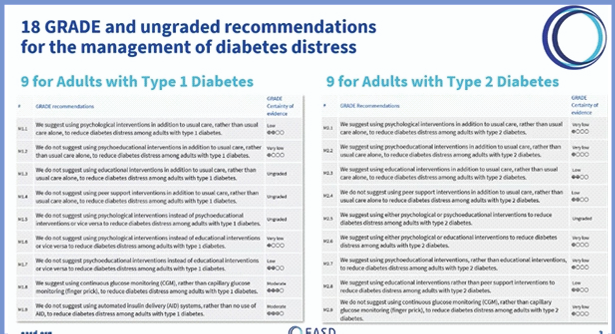
Introduction to Diabetes Distress:
Addressing the emotional side of diabetes and its management has received considerable attention in recent years. At the centre of most of these efforts is the concept of ‘diabetes distress’, a generic term that captures the primary sources and intensity of emotional distress associated with diabetes and its management over time. Karin Kanc discussed the recommendations for the clinical management of diabetes distress. The findings were presented at the EASD Annual th st Meeting 2025, held from 15 -19 September 2025 in Vienna, Austria.