
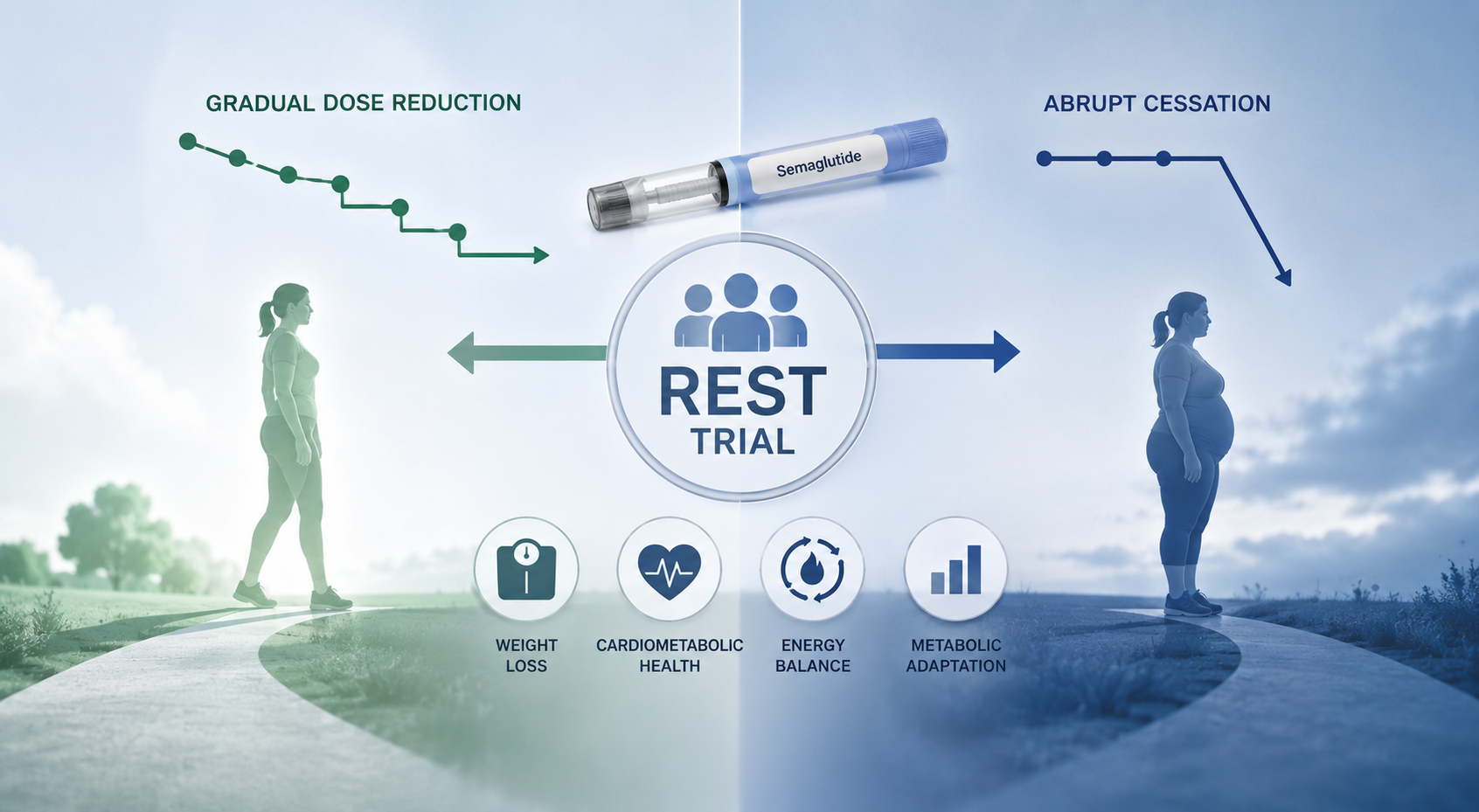
The Recovery Effects After Semaglutide Termination (REST) trial is a prospective, randomized, open-label clinical study designed to investigate the physiological and cardiometabolic consequences of discontinuing semaglutide therapy in individuals with obesity. Although semaglutide has demonstrated substantial and sustained weight reduction together with improvements in cardiometabolic risk factors, there is limited evidence regarding the optimal strategy for treatment discontinuation. Previous studies have shown that stopping semaglutide is frequently associated with weight regain and reversal of metabolic benefits, highlighting obesity as a chronic disease that may require long-term pharmacological management.
The REST trial seeks to determine whether a gradual dose reduction before treatment cessation can attenuate these adverse effects compared with abrupt discontinuation. Approximately 98 adults with obesity who have achieved clinically meaningful weight loss while receiving semaglutide will be randomized to either taper the dose by 25% every four weeks until complete discontinuation or stop treatment immediately. Participants will be followed for changes occurring up to 16 weeks after complete withdrawal, allowing investigators to evaluate both short-term physiological adaptations and cardiometabolic outcomes.
The primary endpoint is the difference in body weight change between the two treatment strategies following semaglutide withdrawal. Secondary endpoints include ambulatory systolic blood pressure, body mass index, waist circumference, and circulating appetite-regulating hormones such as ghrelin, providing insights into the biological mechanisms that may contribute to weight regain after GLP-1 receptor agonist discontinuation. By examining changes in both metabolic risk factors and energy homeostasis, the study aims to clarify whether gradual withdrawal offers a clinically meaningful advantage over immediate cessation.
The findings of the REST trial are expected to inform evidence-based recommendations for discontinuing semaglutide in clinical practice. If dose tapering proves effective in preserving weight loss and cardiometabolic improvements, it could establish a practical strategy for patients who need to discontinue therapy because of cost, adverse effects, or other clinical considerations. Ultimately, the study addresses an important unmet need in obesity management by exploring approaches to sustain the therapeutic benefits of GLP-1 receptor agonists beyond active treatment.
Link: https://journals.plos.org/plosone/article?id=10.1371/journal.pone.0354237