
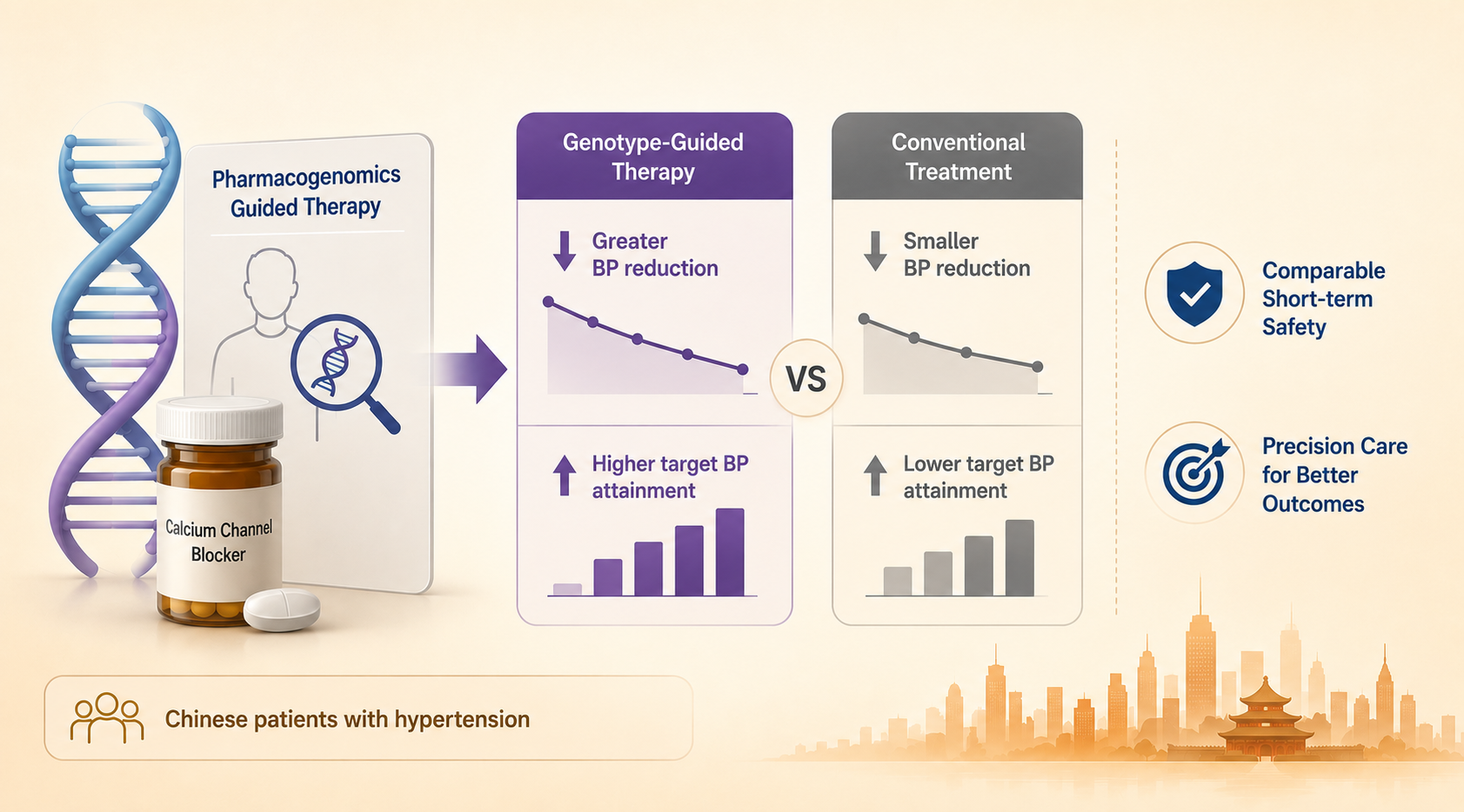
Interindividual variability in antihypertensive drug response presents a major challenge in achieving optimal blood pressure (BP) control. Pharmacogenomics (PGx) offers an opportunity to individualize therapy by identifying genetic variants associated with differential drug efficacy and metabolism. This study evaluated the association of a calcium channel blocker (CCB)-related PGx-guided treatment strategy with BP outcomes and short-term safety in Chinese patients with hypertension through a secondary exploratory analysis of two randomized cohorts.
This analysis pooled data from two randomized cohorts in which antihypertensive treatment was guided by clinically relevant genetic variants, including CACNA1C rs2238032, which influences CCB response, and CYP3A5 rs776746, which affects CCB metabolism. Participants were managed using either a PGx-guided strategy or conventional treatment. Primary outcomes included changes in systolic and diastolic BP and achievement of target BP, while short-term safety was evaluated by monitoring treatment-related adverse events.
Patients managed using the pharmacogenomics-guided strategy experienced significantly greater reductions in systolic and diastolic BP than those receiving conventional care. Genotype-guided therapy also increased the proportion of patients achieving recommended BP targets, suggesting improved therapeutic effectiveness through personalized drug selection and dosing. Importantly, the enhanced BP control was not accompanied by an increased incidence of short-term adverse events, indicating that the PGx-guided approach maintained a favorable safety profile. These findings demonstrate that integrating pharmacogenomic information into CCB prescribing can optimize treatment response while preserving tolerability. The results also reinforce the potential clinical utility of precision medicine in hypertension management, particularly among populations with genetic diversity affecting antihypertensive drug response.
A CCB-related pharmacogenomics-guided treatment strategy was associated with superior blood pressure reduction and improved target BP achievement compared with conventional management, without compromising short-term safety. Incorporating genetic testing into routine hypertension care may enhance treatment personalization, improve BP control, and facilitate more effective use of antihypertensive medications. Larger prospective studies with longer follow-up are warranted to validate these findings and define the role of pharmacogenomics in routine clinical practice.
Link: https://www.tandfonline.com/doi/full/10.2147/DHPS.S637282